
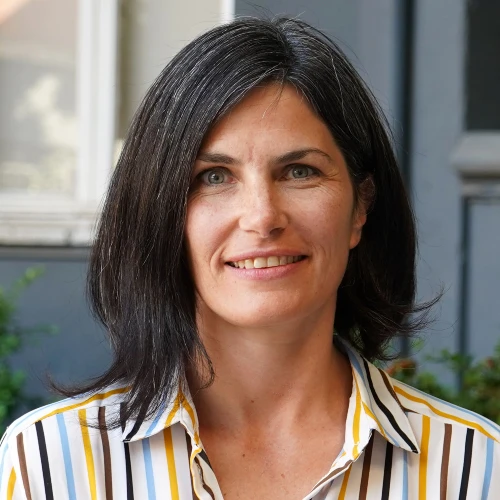
Oriana Bernasconi, PhD in Sociology from the London School of Economics, researcher, and faculty member of the Faculty of Social Sciences of the Universidad Alberto Hurtado leads the project “Millennium Nucleus for Research on Human Rights Violations Data Production and Use by the State (DATA JUSTA),” which received funding from the Millennium Nucleus of Social Sciences of the National Agency for Research and Development (ANID).The project also involves academic Elizabeth LiraWho is the 2017 National Prize for Humanities and Social Sciences and director of the UAH Human Rights Center.
The research aims to advance interdisciplinary scientific knowledge and contribute to improving the management and understanding of human rights violations in Chile. In this interview, Bernasconi explains the challenges and objectives of this project.
-Could you tell us what is the main need that motivated this project?
The need arises from the reality we live in: a society overwhelmed with data but with a critical shortage of truly useful information and relevant knowledge, especially in the area of human rights violations. Although the State holds vast amounts of data, detailed and accessible information is extremely limited. This is due to the sensitivity of the topic and the risks associated with re-victimizing those affected. I am convinced that this project will make a significant contribution to improving the management and understanding of human rights in Chile.
-The management of this information is a challenge for both the State and the organizations working in this area. How is this issue addressed in the project?
In Chile, information on victims of human rights violations is scattered and fragmented across various state agencies, which hinders a comprehensive approach to handling cases. This forces victims to recount their stories repeatedly to different institutions, which is not only painful but also results in the inefficient handling of information. Our project aims to analyze how the State produces and uses information about victims and contribute to the creation of integrated information systems that allow for a better understanding of victims and generate useful data to provide them with adequate reparation and assistance services, both legal and psychosocial.
In Chile, information about victims of human rights violations is fragmented and compartmentalized across different State agencies, making it difficult to manage cases comprehensively.
—This project seems to have an interdisciplinary and intersectional approach. How is this combination reflected in the research?
The project brings together various disciplines such as psychology, law, sociology, criminology, and critical data studies. It also covers fields like memory and human rights, as well as science, technology, and society (STS). By crossing these disciplines, we aim to understand how knowledge about human rights violations is produced and used, ensuring that it is efficient and relevant to address these complex issues.
—How will this cooperation be implemented?
The project involves six national universities. In addition to UAH, it includes the Universidad Diego Portales, Pontificia Universidad Católica, Universidad Austral de Chile, Universidad de Playa Ancha, and Universidad de Tarapacá. It also benefits from the collaboration of the Subsecretariats of Human Rights, Justice, and Crime Prevention, the National Women's Service and Gender Equity, as well as autonomous organizations such as the National Institute for Human Rights (INDH) and the Torture Prevention Mechanism.
The idea is to work directly with State officials to review together how information about these cases is produced and managed. This involves continuous training so that professionals from the regions also benefit from the research.
—Finally, what specific cases will you study over the three years of the project?
We will focus on three distinct types of cases: attempted femicides, human trafficking, and victims of the social unrest. These cases will enable us to explore how the state handles contemporary human rights violations—whether through action or omission—and how we can improve the state’s response. Furthermore, we will seek to support the creation of a modular database that allows information to be shared securely and effectively between different government departments.