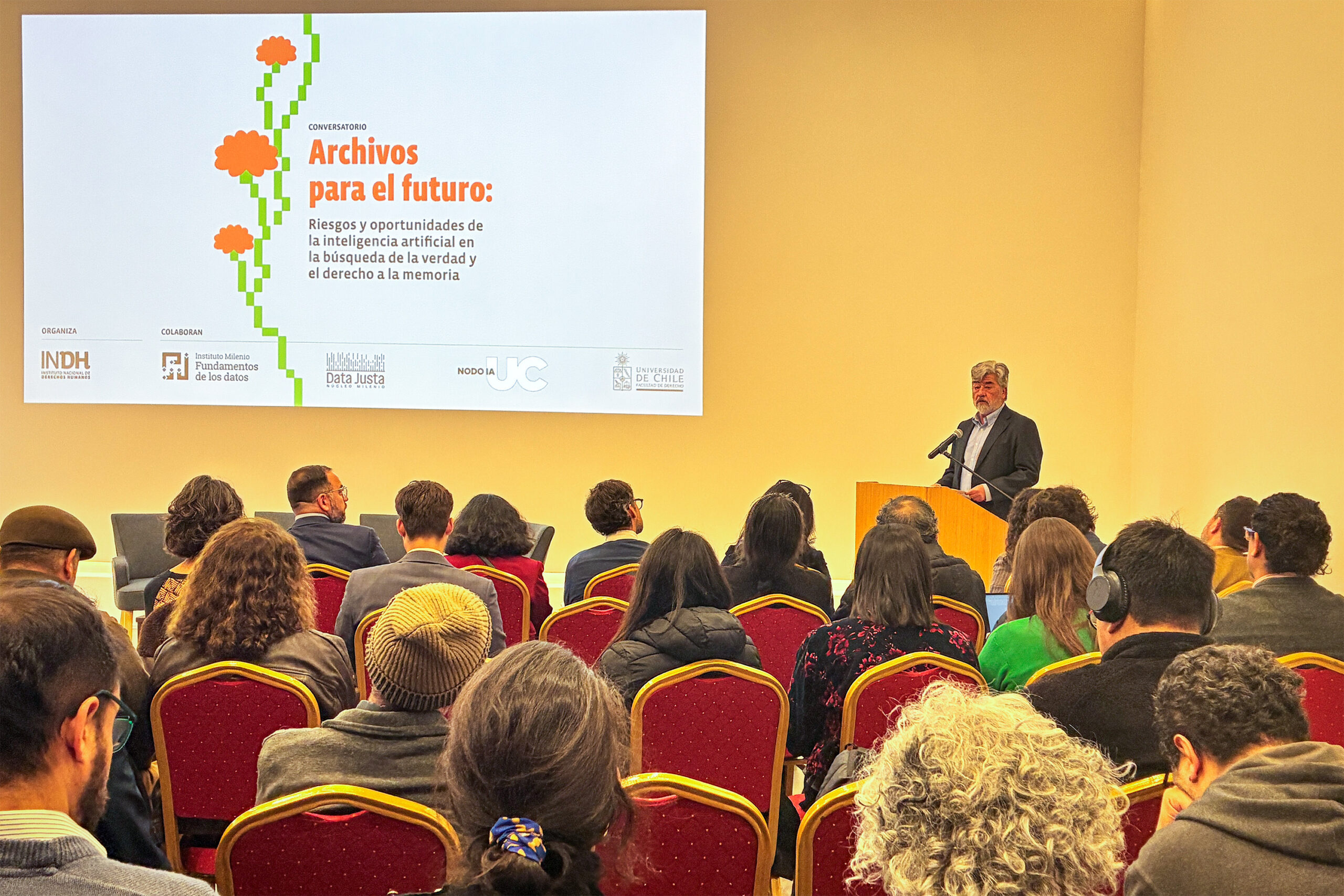
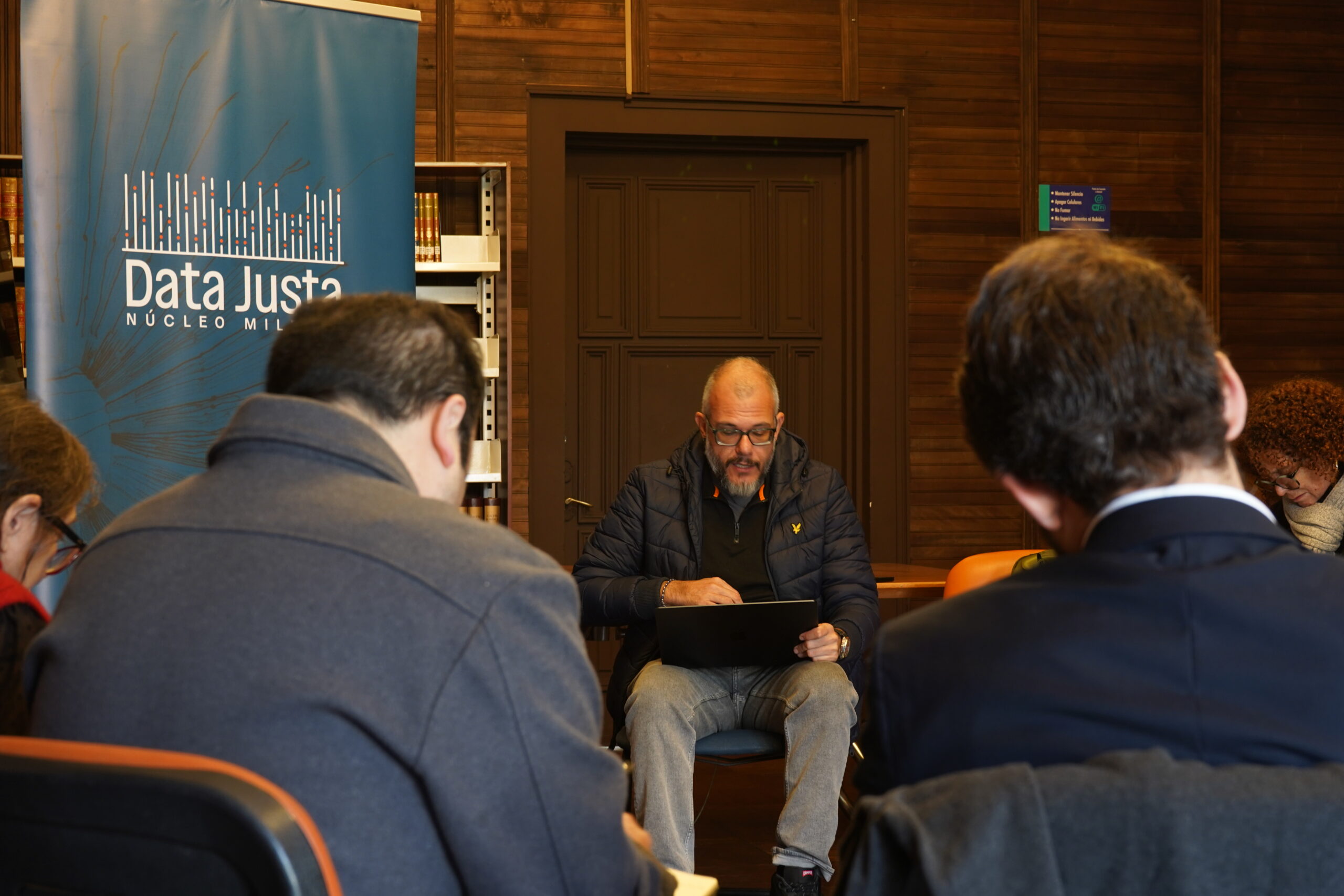
En el marco de su eje formativo, Data Justa realizó el pasado jueves 15 de enero una nueva jornada del Laboratorio Data …
About Data Justa
"We conduct a thorough, interdisciplinary, and collaborative analysis of the Chilean State’s knowledge infrastructures for addressing human rights violations and severe abuses. We aim to identify and bridge gaps in the handling of these cases and to promote a comprehensive, victim-centered approach."
Latest calls and news
Investigación en terreno y trabajo colaborativo en el norte fronterizo
Durante el mes de enero, parte del equipo de Data Justa realizó una serie de actividades de trabajo de campo en la …
Exitosa defensa de tesis de magíster sobre ética e inteligencia artificial en archivos de derechos humanos
Desde Data Justa destacamos la exitosa defensa de la tesis de magíster de Jorge Maldonado Soto, ingeniero civil informático con especialización en …
[Columna de opinión] Estallido social: 12 mil delitos fueron por violencia institucional y 11 mil contra la propiedad
A seis años del estallido social, esta columna publicada en El Mostrador reflexiona sobre el reciente informe de la Fiscalía y el …
La importancia de investigar los registros y producción de conocimiento para fortalecer la democracia
En el marco de la serie de entrevistas realizadas por la Cátedra de Derechos Humanos del Departamento de Historia de la Universidad …
Universidad de Atacama se suma a Núcleo Milenio DATA JUSTA mediante la firma de un convenio de colaboración
El Núcleo Milenio DATA JUSTA y la Universidad de Atacama (UDA) oficializaron un convenio de colaboración que permitirá ampliar las capacidades de …
We live in an era marked by violence. The production and dissemination of knowledge is crucial to addressing these violations, foster their understanding, and promote justice, truth, and reparation. However, this task faces complex challenges: data fragmentation, lack of standardization, legal limitations, and the incessant repetition of victims' testimonies. Overcoming these gaps is essential to foster a democratic society, prevent recurrence, and strengthen the rule of law.
The Millennium Nucleus DATA JUSTA is a collaborative scientific initiative in the social sciences that, through critical theory and ethnographic methods, analyzes the knowledge produced by the State regarding human rights violations and severe abuses, as well as the responses provided to victims. The project seeks to improve human rights data systems and policies, as well as victim assistance and reparation, in alignment with international standards.
The aim of DATA JUSTA is to promote accountability, protection and progressive human rights advancement for peace, justice, sustainable governance, and comprehensive social development.
The project is organized into three research lines: 1. Data production and use, 2. Victim management, assistance and reparation, and 3. Control, Surveillance, and State Compliance with National and International Commitments Regarding Victims. It focuses on three types of violations: attempted femicides, human trafficking, and institutional violence in a political context (2019–2020 social uprising).
DATA JUSTA will be developed between 2024 and 2027 with funding from the National Agency for Research and Development (ANID).