
Digital technologies offer new possibilities for accessing information, analysing large archives and establishing connections between documents. At the same time, they raise challenges for ensuring that information remains reliable, retains its context and can be verified.
The expansion of digital technologies has transformed how information is produced, preserved and accessed. It is now possible to consult documents from different locations, review and process large volumes of records, and establish connections that might be difficult to identify through a manual search.
However, these possibilities also present challenges. Having more information does not necessarily lead to a better understanding of events. This is partly because records may be incomplete, contain errors or be organised according to categories that exclude relevant aspects. Digital tools may also reproduce these limitations or generate new, incorrect associations.
One of the main challenges of the digital age is therefore to safeguard information integrity. This means ensuring that data and documents are reliable, retain their context and can be reviewed, verified and corrected.
The right of access in the digital age
Every year on 28 September, the International Day for Universal Access to Information is commemorated. The date was established by UNESCO’s General Conference in 2015 and subsequently recognised by the United Nations General Assembly in 2019. The commemoration promotes access to information as a right and as a condition for public participation, accountability and the exercise of other rights.
This year’s commemoration focused on upholding information integrity in the digital age and on the role of access to information in addressing information disorder. In this context, Sierra Leone, through its Right to Access Information Commission (RAIC), and UNESCO convened a joint event bringing together the Global Conference for the International Day for Universal Access to Information and the 17th International Conference of Information Commissioners. The event takes place from 28 to 30 September.
Topics addressed at the conference include the importance of providing timely and reliable official information, moving from transparency towards proactive disclosure, strengthening record-keeping practices and using technology to facilitate access to credible information. Media and information literacy was also included as a condition for enabling people to find, evaluate and use the information available.
These dimensions are interconnected. Reliable access cannot be guaranteed when records are incomplete, fragmented or outdated. Nor is it enough to publish large quantities of data if people cannot understand them, determine their origin or assess their quality.
Moreover, when institutions fail to provide information, respond too late or present it in ways that are difficult to understand, they create gaps that can increase exposure to false or misleading information.
Artificial intelligence, archives and human rights
Concerns about information integrity are also present in the use of artificial intelligence to work with human rights archives.
These archives can be essential for reconstructing events, seeking the truth, establishing responsibility, developing reparation processes and sustaining memory. Decisions about what is recorded, how information is organised and the conditions under which it is used are therefore not merely technical. They also shape what institutions are able to know and investigate.
Artificial intelligence offers possibilities for reviewing large numbers of documents, identifying matches and connecting records. However, its use also raises risks related to privacy, bias, disinformation, data security and the effects of automating certain tasks.
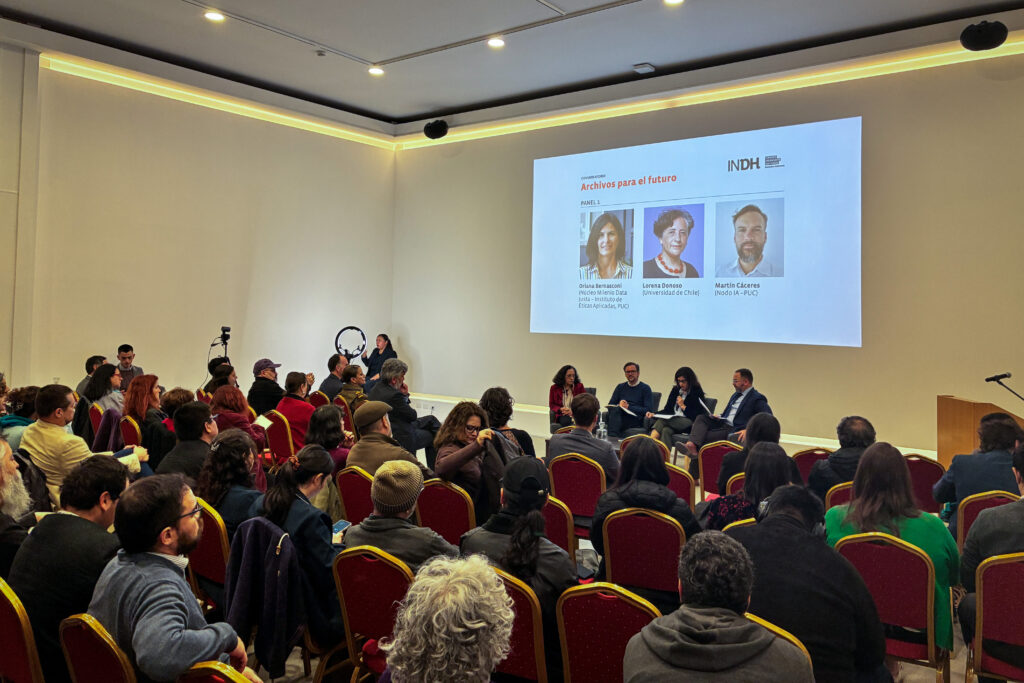
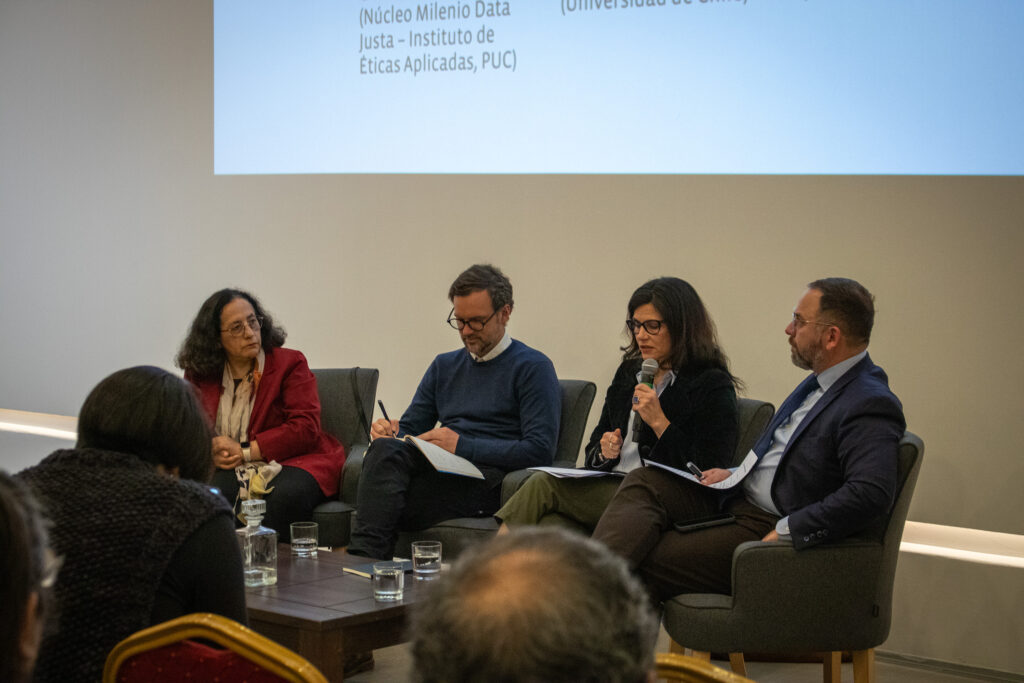
These issues were addressed at the seminar Archives for the Future: Risks and Opportunities of Artificial Intelligence in the Search for Truth and the Right to Memory, organised by Chile’s National Human Rights Instituteand held last week with the participation of Oriana Bernasconi, Director of Data Justa.
Although they took place in different contexts, the international commemoration and the seminar provide an opportunity to reflect on a shared challenge: how to take advantage of the possibilities offered by digital technologies while protecting information integrity.
While the international conference addressed access to reliable information in the face of information disorder, the seminar examined this concern in relation to human rights archives, where the ways in which information is recorded, organised and analysed can have consequences for the search for truth and the right to memory.
Data are not neutral
During the seminar, Bernasconi argued that the discussion surrounding artificial intelligence must be situated within a broader reflection on how knowledge is produced, organised and used.
“Data are not neutral; knowledge is not neutral,” she said.
Documentary practices and the sources available influence what can be investigated, the evidence that can be produced and the narratives constructed around events and responsibilities. This situation precedes the use of artificial intelligence.
State-held information about human rights violations may be fragmented, dispersed across different institutions or recorded using categories that do not always adequately represent the complexity of individual cases. The limitations of these records shape what a technological tool can subsequently analyse.
The discussion also considered why this information is produced. A just and ethical data infrastructure should not be limited to counting violations but should help to understand the conditions under which they occur. As Bernasconi explained:
“A just and ethical State data infrastructure should not only report the number of attempted, completed or frustrated femicides during a given period in a given society. It should also seek to provide information that allows us to understand the roots of violence and prevent its recurrence.”
From this perspective, access to complete and contextualised information does more than enable us to understand what happened. It can also help identify the causes of violations, guide State responses and strengthen its capacity for prevention.
Responsibility does not begin with the algorithm
The ethical challenges associated with artificial intelligence do not begin when a tool is implemented. They are also present in decisions about what information is collected, what it will be used for, how long it will be retained, who may access it and under what conditions it may be used again.
In archives relating to serious human rights violations, these decisions must take into account privacy, information security, the possibility of revictimisation and the rights of the people represented in the records.
It is also necessary to retain the ability to review results produced using digital tools and to understand how particular associations were established. Artificial intelligence can support a search, but its results require verification and must form part of broader analytical processes.
As Bernasconi stated during the seminar, “A State with a rights-based approach should constantly ask whether the ways in which it works with these data lead to greater justice, or not.”
Safeguarding information integrity therefore involves more than preventing archives from being lost or altered. It also requires us to ask how they were produced, what absences they contain, how they are interpreted and what consequences their use may have.
In the digital age, the right of access to information and the right to truth depend both on the possibilities offered by new technologies and on the criteria used to introduce them. Artificial intelligence can expand our capacity for searching and analysis, but responsibility for what is recorded, connected, published and presented as true remains human and institutional.
To continue exploring these ideas about the right to truth, access to information and the challenges of the digital age, you can consult the following resources:
- To learn more about the joint event bringing together the 2026 Global Conference for the International Day for Universal Access to Information and the 17th International Conference of Information Commissioners, organised in Sierra Leone by RAIC in collaboration with UNESCO, click here..
- To watch the recording of the seminar Archives for the Future: Risks and Opportunities of Artificial Intelligence in the Search for Truth and the Right to Memory, organised by Chile’s National Human Rights Instituteorganised by Chile’s National Human Rights Institute, click here..