
On Monday, June 23, the First Biennial Territorial Workshop of the Millennium Nucleus for Data Justa, titled “Estándares internacionales en derechos humanos: aplicación y desafíos en tres casos contemporáneos”. The activity took place in the Plenary Hall of the Facultad de Ciencias Jurídicas y Sociales de la Universidad Austral de Chile (UACh), at the Isla Teja campus in Valdivia, and was broadcast live through the UACh Law School YouTube channel.
This workshop marked a milestone within the project's territorial activities calendar, bringing together students, researchers, academic authorities, representatives of the State, institutions and civil society.
The day began with welcoming remarks from the Regional Secretary of Justice and Human Rights of the Los Ríos Region, Jorge Ríos del Río, who highlighted the importance of the Millennium Nucleus:
“This interdisciplinary scientific work on human rights is an important contribution to strengthening the human rights culture in our region and the entire country. It represents a valuable opportunity for dialogue, joint reflection, and the construction of situated knowledge, with a view to strengthening fairer and more equitable public policies.”
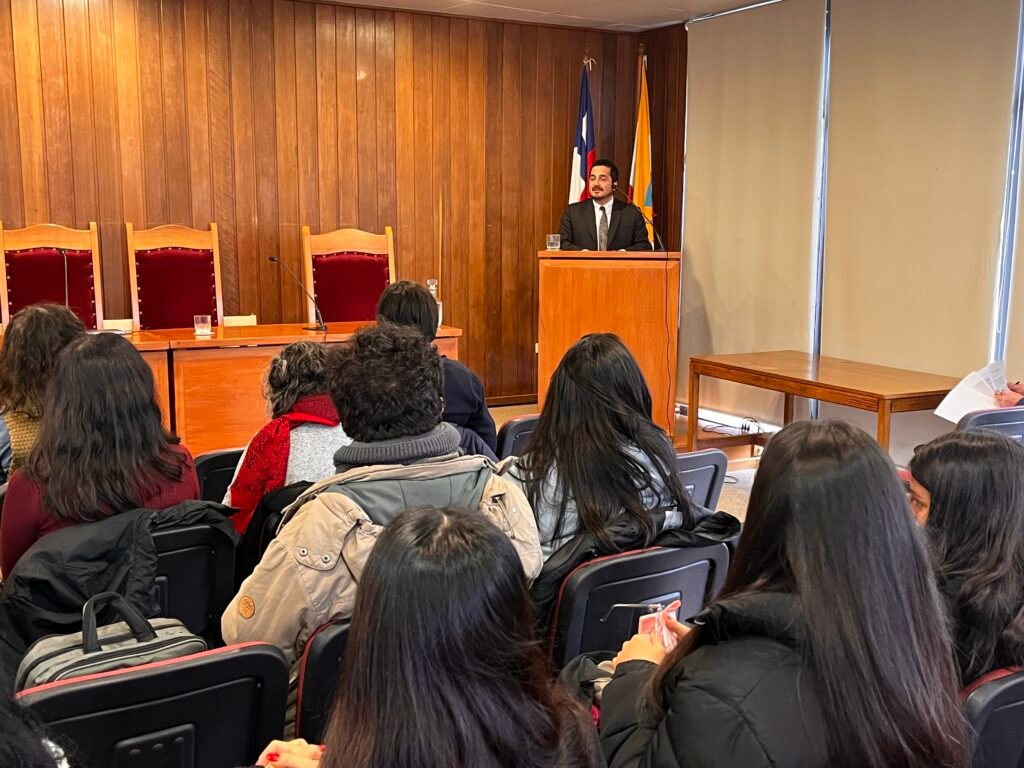
Credit: Community Engagement Unit of the Faculty of Legal and Social Sciences, UACh.
For her part, Dean Daniela Accatino noted that it is a true honor to welcome the first Biennial Territorial Workshop of the Millennium Nucleus Data Justa.
“I do so with special enthusiasm not only in my capacity as Dean of the Faculty of Legal and Social Sciences of the Austral University of Chile, but also as a member of the research team of this project, which exemplifies the public vocation of our university.”
Following the opening remarks, a video presentation of the Data Justa project was shown. The presentations then took place.
- The social psychologist and international consultant, Olga Rebolledo, opened with her presentation “Reparar desde la raíz”, focused on psychosocial work with victims of trafficking, gender violence, and forced migration in humanitarian contexts. She shared experiences developed in Nigeria and Colombia, addressing comprehensive reparation processes, the design of care protocols, and institutional strengthening, all from an approach based on human dignity.

- Later, the dean Daniela Accatinoand the prodean Felipe ParedesBoth from the Faculty of Legal and Social Sciences of the UACh, reflected on the international standards for the treatment of victims and the challenges that the Chilean State faces in its implementation.
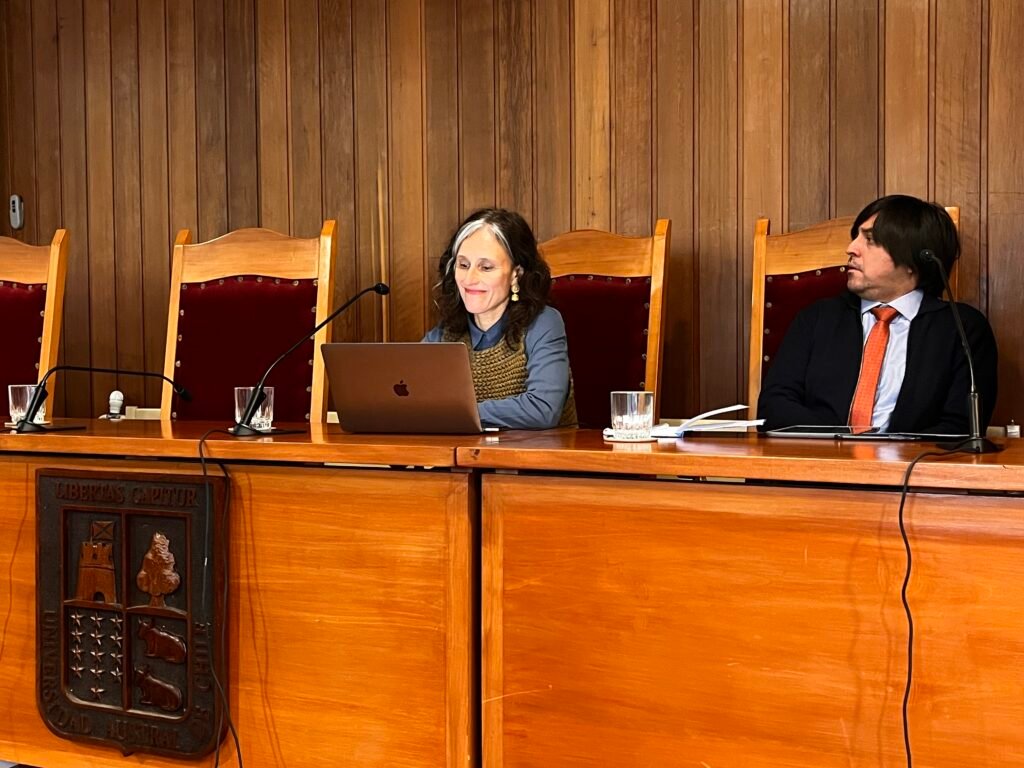
Credit: Community Engagement Unit of the Faculty of Legal and Social Sciences, UACh.
The workshop concluded with an open dialogue with the audience, allowing participants to share questions, experiences, and perspectives on state registration practices, current regulatory frameworks, and opportunities for institutional strengthening. The discussion highlighted the need to move toward public policies that integrate interdisciplinary and ethical approaches in providing support to victims of human rights violations.
The dean Daniela Accatino He highlighted the value of the project and the university's commitment to Data Justa's work:
“This core group represents an initiative deeply committed to issues of high social relevance: the protection and exercise of fundamental rights, especially in contexts where these are threatened or weakened by conditions of structural vulnerability. In this sense, Data Justa aligns perfectly with the university's duty to actively contribute to the common good.”
She also highlighted the public impact dimension that characterizes the project, as well as its strong interdisciplinary focus, noting that researchers from different disciplines and academic units participate in Data Justa, including three from the Austral University of Chile.
“Our Faculty of Legal and Social Sciences collaborates closely with the Faculty of Medicine, the Institute of Psychology, and with students who are also an active part of this collective proposal,” she added.
You can watch the full workshop again at the following link:
Ver grabación en YouTube
From the team of Data Justa, we thank everyone who participated, supported, and made this activity possible, both in person and remotely. This workshop marks the beginning of a series of meetings that aim to strengthen the link between academic research, public institutions, and social organizations around the development of fairer, more inclusive, and context-specific policies.