
During January, members of the Data Justa team carried out a series of fieldwork activities in the Tarapacá Region, aimed at deepening the understanding of victimizing events — such as human trafficking and femicide — and of institutional responses to these forms of violence. This work was developed with attention to the specificity of the territory and its borderland condition, where highly complex social and institutional dynamics converge.
These activities took place within the framework of a joint planning and research meeting with the Millennium Institute for Violence and Democracy (VioDemos) and the Millennium Nucleus on Criminal Complexity, consolidating a space for dialogue among teams researching converging issues from different disciplinary approaches.
One of the central components of this fieldwork was engagement with State institutions working directly in the territory. In this context, the Data Justa team conducted interviews with different public agencies in order to examine how situations of violence and rights violations are recorded, interpreted, and managed in contexts marked by human mobility and structural inequality.
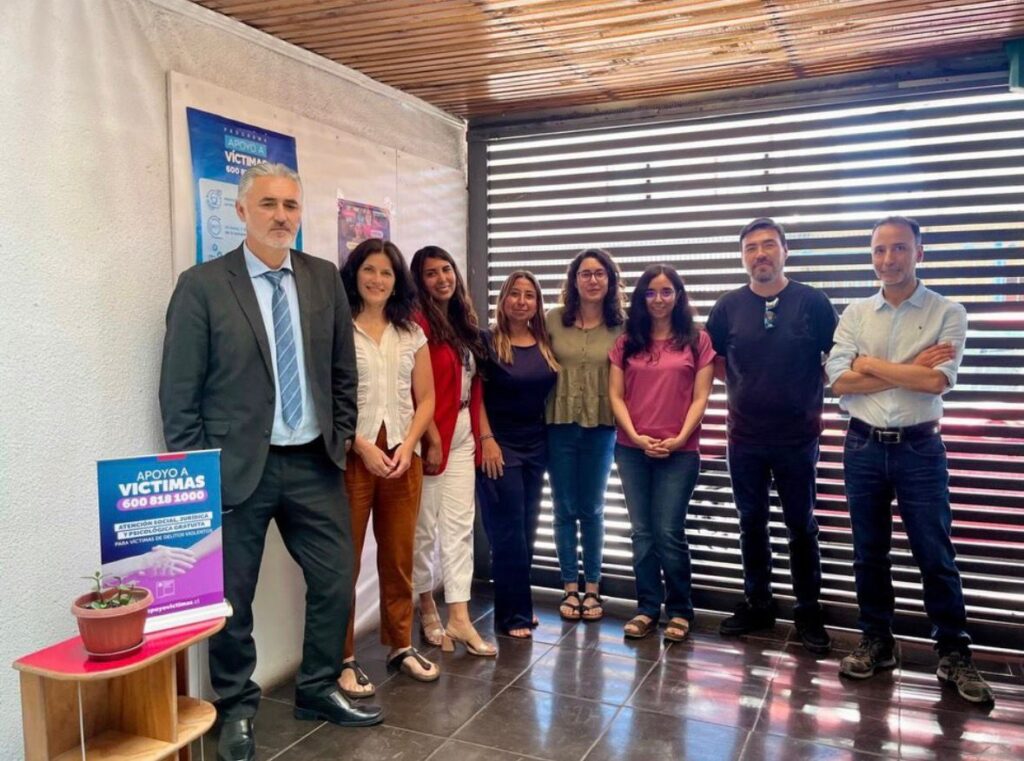
Among these activities, the team met with the staff of the Support Center for Victims of Violent Crimes in Alto Hospicio (CAVD). This meeting made it possible to discuss in depth the characteristics of Data Justa’s case studies in the territory, as well as institutional approaches to addressing them. The dialogue provided insight, from the teams’ own experience, into the main challenges involved in supporting victims of serious violence, as well as relevant lessons on everyday work in contexts of high social demand.
Another activity held as part of this meeting was the seminar The Chilean North in Perspective: Dialogues on Violence, Criminal Complexity, and Human Rights, hosted by the University of Tarapacá. The event brought together national and international researchers, along with institutional and civil society actors, creating a space for collective reflection on the specificities of northern Chile and its borderland condition. The program included academic presentations and thematic working groups that enabled discussion, from different perspectives, of the effects of exceptionalism, criminalization, gender-based violence, and State responses in contexts of high social complexity.
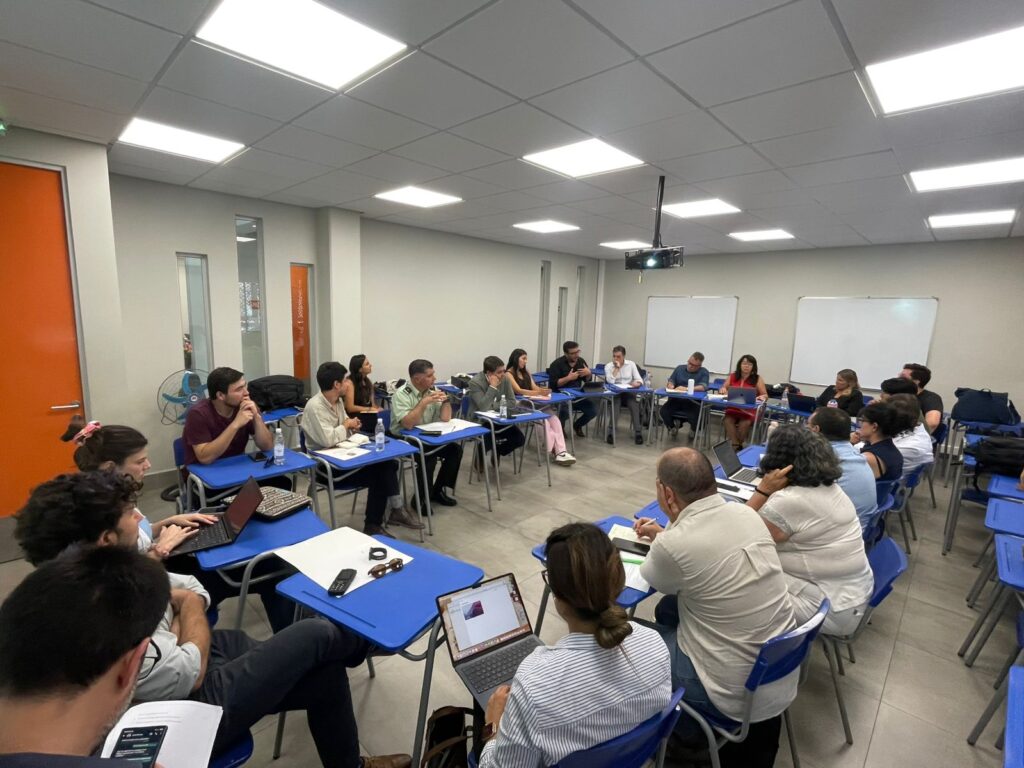
For Data Justa, these spaces for exchange, field research, and collaborative work are essential, as they make it possible to advance a situated understanding of violence, recognizing both institutional practices and local experiences. We are especially grateful to all the people, teams, and institutions that made this meeting possible, and in particular to the public officials who generously shared their time, knowledge, and experiences, contributing to the development of research committed to human rights and data justice.