
As part of its training area, Data Justa held on Thursday, January 15 a new session of the Laboratorio Data Justa. This laboratory is a regular working space within the project, focused on data analysis, methodological discussion, and collective reflection among the research team. On some occasions, it also includes training activities with students and thesis researchers linked to the project.
On this occasion, the session had a formative focus and brought together the Data Justa team with research assistants from the 2026 Summer IPRE Program (UC) and undergraduate and graduate thesis researchers, who presented progress on their research and received feedback from the team.
The program included a presentation by Florencia Yáñeza Law student at Pontificia Universidad Católica de Chilewho shared progress on her internship work focused on the analysis of judicial rulings related to the crime of human trafficking. This was followed by Benjamín Alcántara, a Social Work student at the same university, who presented progress on his research based on the analysis of statistics and reports produced by state agencies and civil society organizations on this phenomenon.
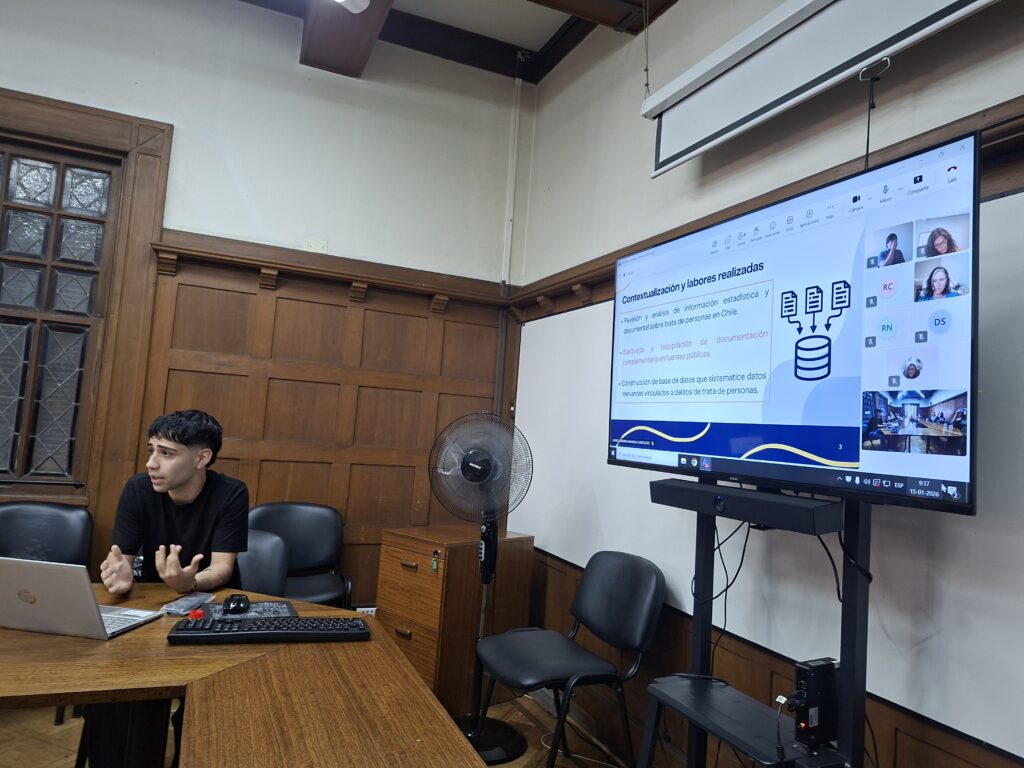
The session also included thesis progress presentations by Romina Mera's thesis., a master’s thesis researcher in Social Work at Pontificia Universidad Católica de Chile, who is developing her research project “Reparation as a Path: Trajectories of Human Trafficking Victims and Their Articulation with Public Policies for Rights Restitution in Chile,”, and by Diana Jara, a thesis researcher at Universidad Diego Portales, whose work examines the application of evidentiary standards and a gender-sensitive approach in Chilean case law on attempted femicide.
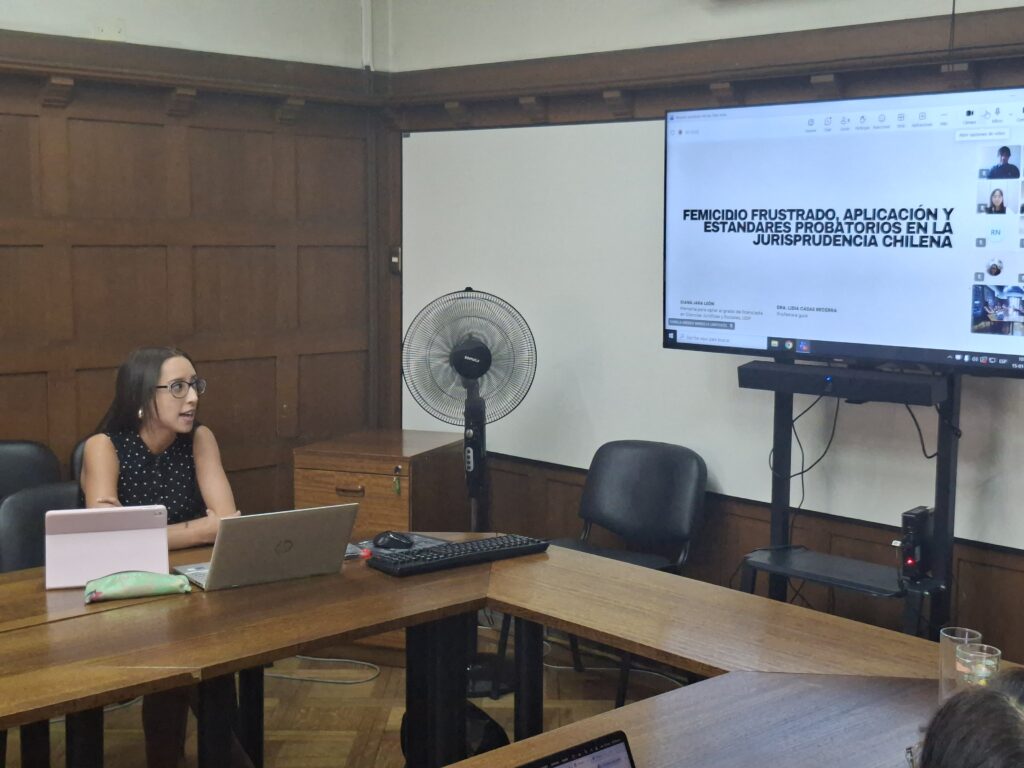
The presentations were followed by a round of questions, comments, and collective discussion, which was valued as a particularly fruitful space for academic exchange and critical reflection, both for the students and for the project team.
The session reaffirmed the Data Justa Laboratory as an important space for sharing progress, questions, and methodological decisions, fostering collective and interdisciplinary work that supports research processes at different stages of training.