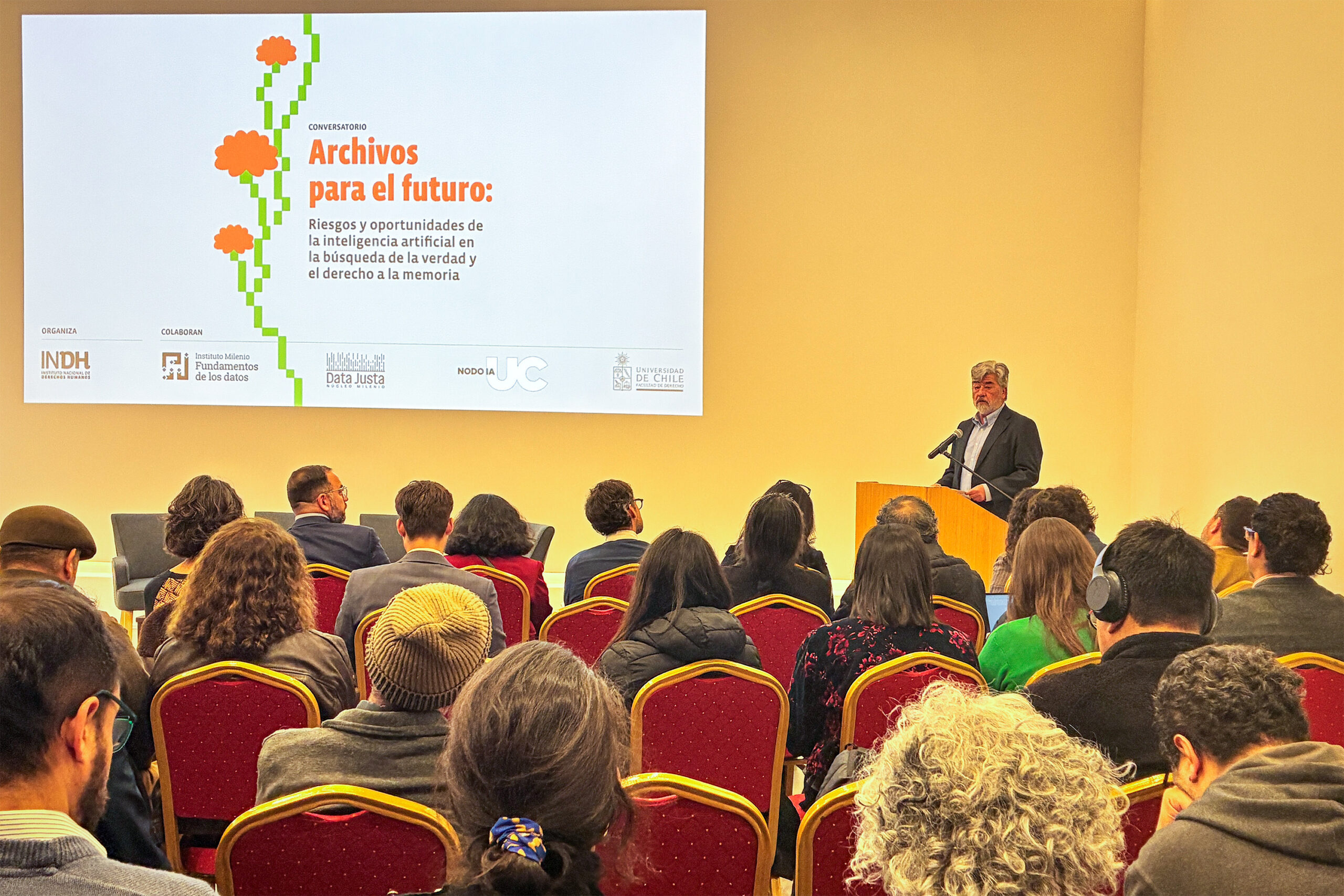
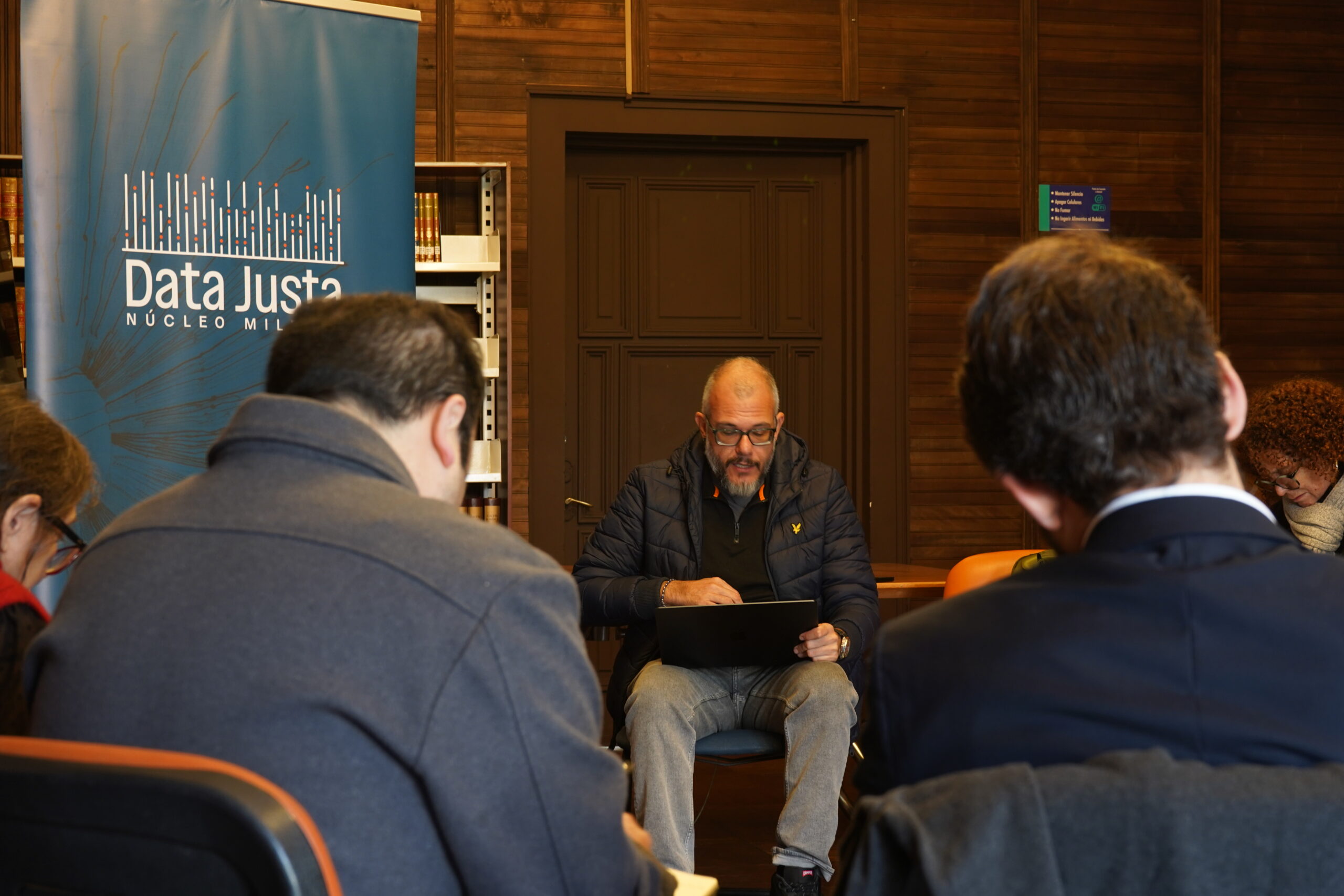
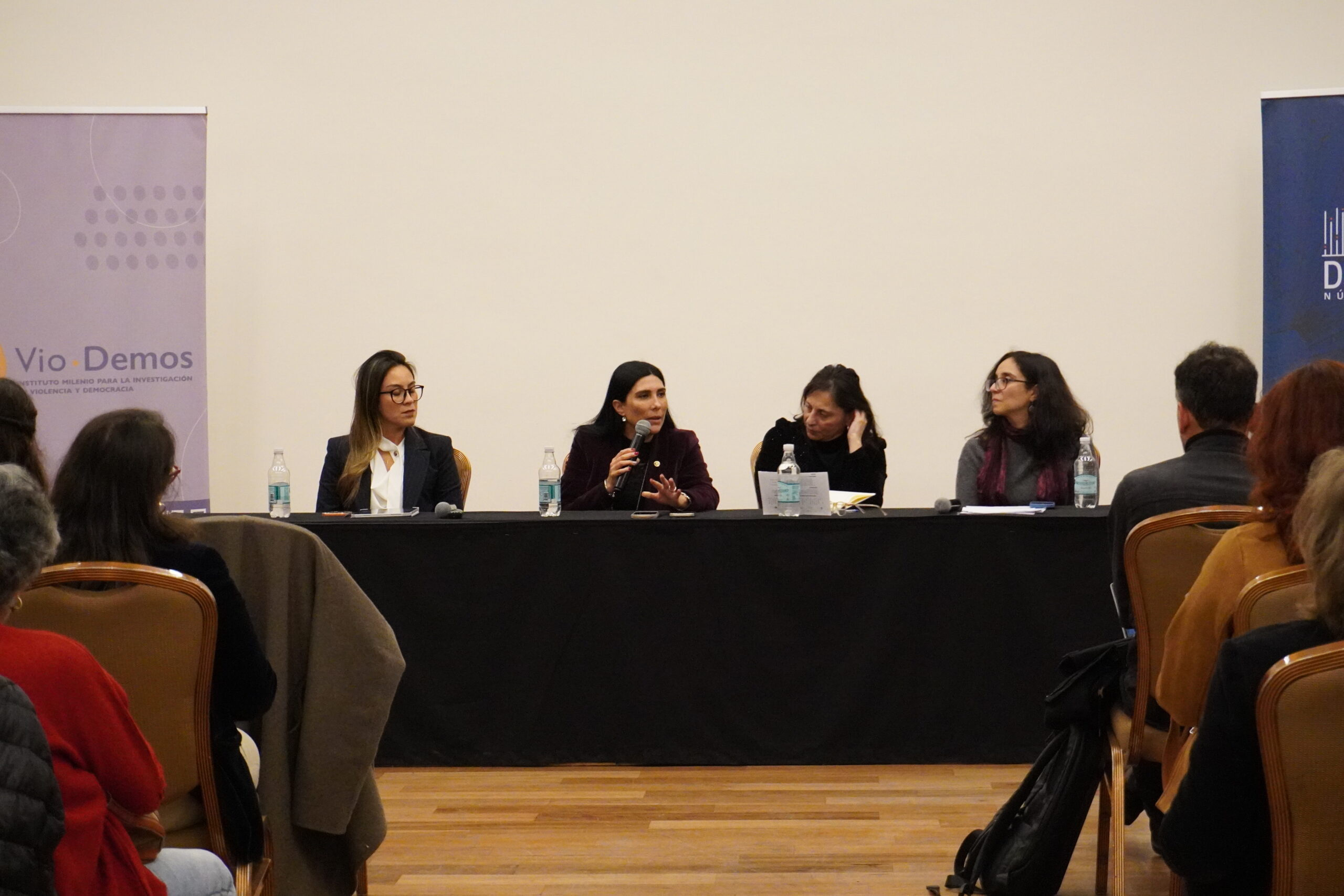
As part of the 13th Red CTS Conference, held at the University of Concepción, researchers Paola Moreno and Oriana Bernasconi presented …
About Data Justa
"We conduct a thorough, interdisciplinary, and collaborative analysis of the Chilean State’s knowledge infrastructures for addressing human rights violations and severe abuses. We aim to identify and bridge gaps in the handling of these cases and to promote a comprehensive, victim-centered approach."
Latest calls and news
Data Justa’s Training Area Brings Together Students and Thesis Researchers for a Collaborative Work and Feedback Session
As part of its training programme, Data Justa held a new session of the Data Lab on Thursday 15 January …
Field Research and Collaborative Work in the northern borderlands
During January, members of the Data Justa team carried out a series of fieldwork activities in the …
Successful Master’s Thesis Defense on Ethics and Artificial Intelligence in Human Rights Archives
From Data Justa, we are pleased to highlight the successful defense of Jorge Maldonado Soto’s master’s thesis. Jorge is a computer civil engineer specializing in …
[Opinion] Social Uprising: 12,000 Offenses Linked to Institutional Violence and 11,000 to Property Crimes
Six years after the social uprising, this column published in El Mostrador reflects on the recent report by the Public Prosecutor’s Office and the …
The Importance of Studying Records and Knowledge Production to Strengthen Democracy
As part of the interview series conducted by the Human Rights Chair of the Department of History at the University …
We live in an era marked by violence. The production and dissemination of knowledge is crucial to addressing these violations, foster their understanding, and promote justice, truth, and reparation. However, this task faces complex challenges: data fragmentation, lack of standardization, legal limitations, and the incessant repetition of victims' testimonies. Overcoming these gaps is essential to foster a democratic society, prevent recurrence, and strengthen the rule of law.
The Millennium Nucleus DATA JUSTA is a collaborative scientific initiative in the social sciences that, through critical theory and ethnographic methods, analyzes the knowledge produced by the State regarding human rights violations and severe abuses, as well as the responses provided to victims. The project seeks to improve human rights data systems and policies, as well as victim assistance and reparation, in alignment with international standards.
The aim of DATA JUSTA is to promote accountability, protection and progressive human rights advancement for peace, justice, sustainable governance, and comprehensive social development.
The project is organized into three research lines: 1. Data production and use, 2. Victim management, assistance and reparation, and 3. Control, Surveillance, and State Compliance with National and International Commitments Regarding Victims. It focuses on three types of violations: attempted femicides, human trafficking, and institutional violence in a political context (2019–2020 social uprising).
DATA JUSTA will be developed between 2024 and 2027 with funding from the National Agency for Research and Development (ANID).